The Challenge of Feed Formulation Safeguards
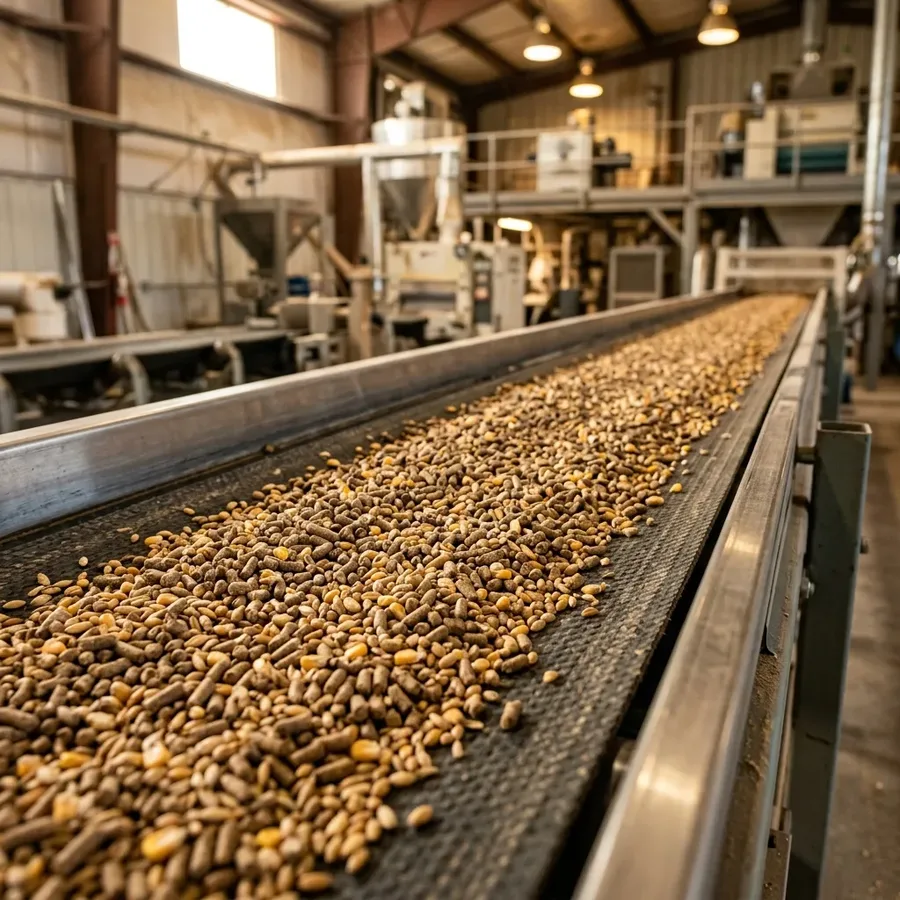
Commercial cattle feed formulation is a highly competitive B2B industry, representing a critical sector within food and feed processing. Feed mills must guarantee strict macronutrient levels—principally crude protein, fat, and moisture—to comply with regulatory labels and customer nutritional requirements. However, raw crop inputs (like soybean meal, corn, and barley) display massive nutrient variances depending on the batch, source, and storage conditions.
To avoid violating minimum protein regulations, mills traditionally over-formulate, adding an extra 1.0% to 1.5% of expensive protein concentrates (such as soybean meal) as a safety margin. This "safety giveaway" is a major margin drain, adding hundreds of thousands of dollars in annual raw material costs.
"By relying on manual, retrospective lab tests that take 2-4 hours to complete, feed mills cannot adjust mixers in real-time, forcing them to systematically over-formulate raw ingredients."
The Inline NIR Solution
A midwestern cattle feed mill producing 150,000 tons of compound feed annually partnered with USTECH Innovations to integrate real-time process analytics. We installed the USTECH MasterLine directly over the mixer discharge chute, measuring moisture, fat, protein, and starch levels continuously as the feed left the mixer.
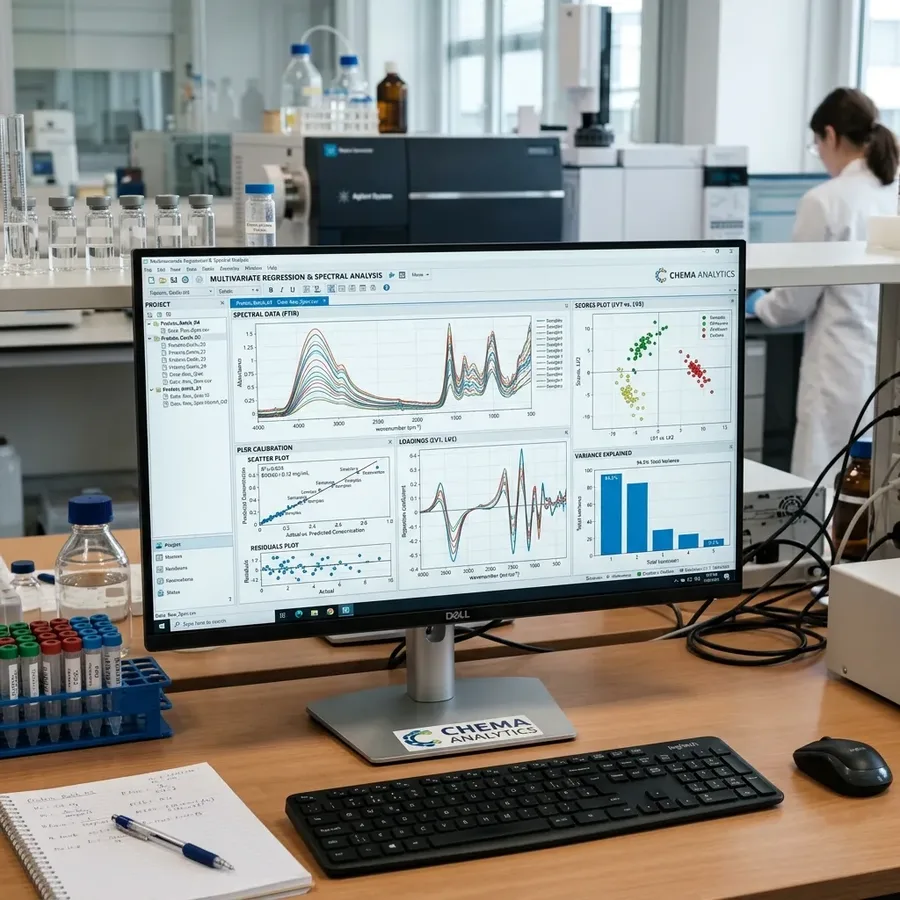
The sensor scanned the falling feed every 5 seconds, sending spectral data to the ProChem Process Control Software, which was integrated directly into the mill's SCADA system via OPC UA. This enabled the mill's automation system to dynamically adjust dosing valves for moisture and liquid fat, and alert operators immediately if protein levels shifted from the target window.
Key Findings & Economic Results
After a six-month continuous trial, data validation against laboratory Kjeldahl and oven drying reference methods showed outstanding performance:
| Parameter | Target Value | Pre-NIR Variation (SD) | Post-NIR Variation (SD) | Total Margin Change |
|---|---|---|---|---|
| Crude Protein | 16.50% | ±0.85% | ±0.18% | Giveaway reduced by 1.10% |
| Moisture | 12.50% | ±0.90% | ±0.15% | Moisture yield increased by 0.95% |
| Crude Fat | 4.00% | ±0.45% | ±0.10% | Optimal fat usage achieved |
Financial Return on Investment (ROI)
By stabilizing moisture control and reducing the systematic protein giveaway from 17.5% down to 16.6% (much closer to the legal minimum of 16.50%), the mill achieved direct savings:
- Annual Soy Meal Savings: $84,000 (reduced soy usage by 240 tons).
- Moisture Yield Optimization: $58,000 (safely keeping moisture closer to the 12.50% upper limit without risking mold growth).
- Reduced Batch Rejections: $22,000 (elimination of out-of-spec batches that required re-milling or selling at a loss).
- Total Annualized Benefit: $164,000
With an initial installation cost of $78,000 for the ProLine17ES sensor and ProChem software suite, the facility achieved full investment payback in just 5.7 months.
Conclusion
This case study proves that real-time inline spectroscopy is no longer a luxury. In modern feed production, where raw material margins are thin, moving from retrospective laboratory checks to continuous, closed-loop inline feedback is the fastest path to process optimization, quality safety, and immediate margin protection.
References
- ISO 12099 - Animal feeding stuffs, cereals and milled cereal products — Guidelines for the application of near infrared spectrometry.
- "Precision Feeding in Ruminants: Economic Impacts of Feed Formulation Control," Dairy Science Review, 2023.
- "Real-Time Process Analytics for Mixing Uniformity in Animal Feed Mill Operations," Journal of Agricultural Engineering Research, 2022.