
Blogs & Technical Papers
Read articles, product announcements, and whitepapers on the implementation of NIR spectroscopy.

How NIR Calibration Works: PLS Explained
A plain-language guide to how a PLS calibration turns NIR spectra into composition values: latent variables, the number of factors, validation statistics and the limits set by the reference method.
Read Guide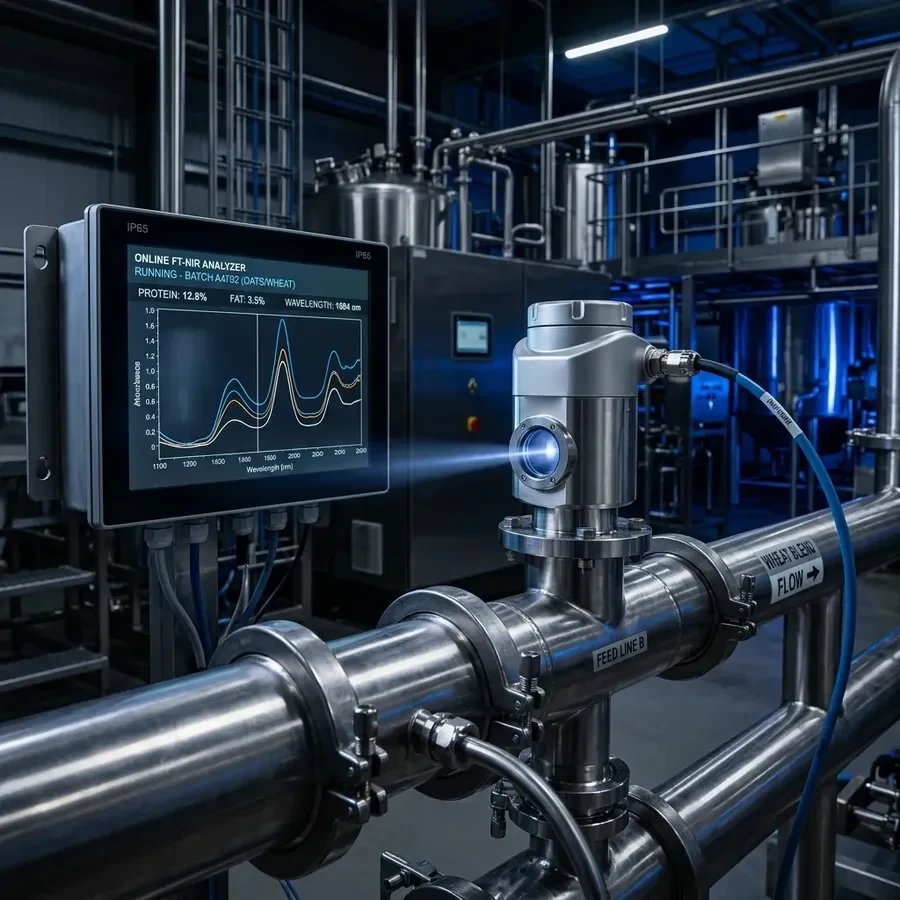
The Power of In-Line Analysis: A Paradigm Shift in Quality Control
What the shift from laboratory-based, reactive quality control to in-line measurement and control actually involves: the PAT framework, ICH vocabulary, real-time release testing and multivariate control loops.
Read Article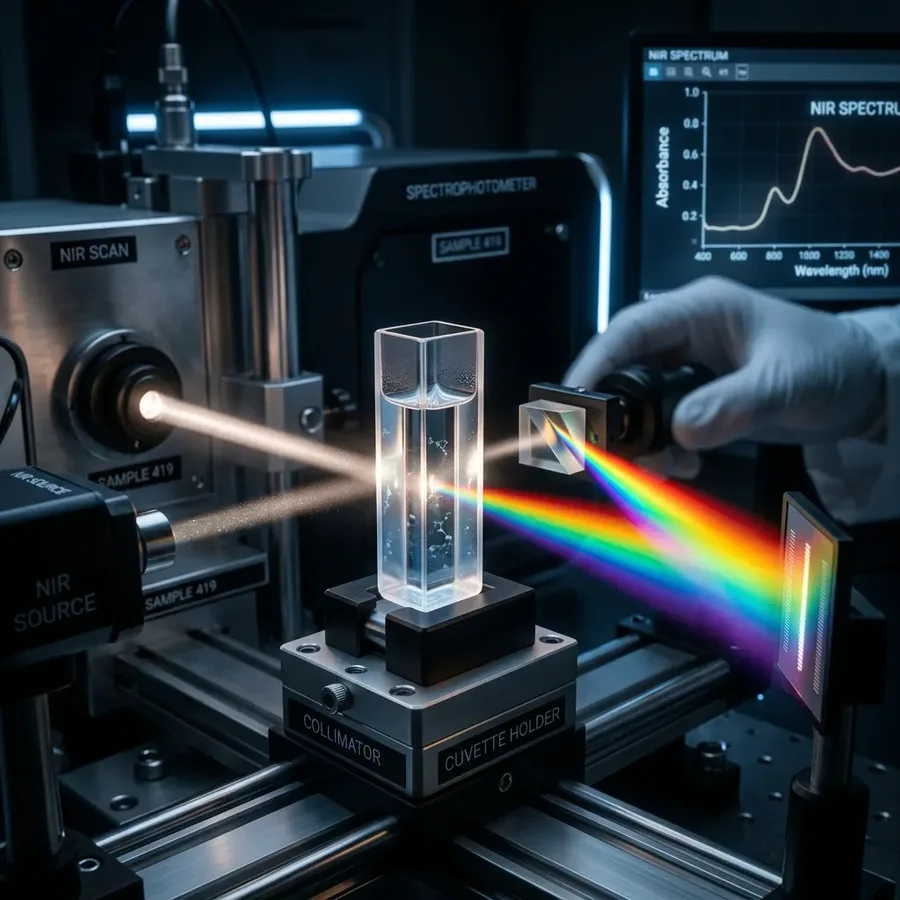
What Is NIR Spectroscopy?
An introduction to near-infrared spectroscopy: what NIR light is, where it was discovered, what overtone and combination bands reveal, why calibration is essential and where the technique reaches its limits.
Read Guide
Choosing the Near-Infrared Spectral Region
What the short-wave, overtone and combination regions of the near-infrared each carry, which detectors reach them, and why the right region depends on the sample rather than on the widest range.
Read Guide
ProChem: Closing the Loop Between Measurement and Control
What has to happen between a spectrum leaving an analyzer and a set point changing in the PLC: result validation, control structure, alarm handling and the record that makes the decision traceable.
Read Article
How to Build the Business Case for Inline NIR
A method for building the business case for inline NIR from your own plant data: which value levers to quantify, how variance reduction becomes a target shift, and which costs and risks belong on the other side.
Read Guide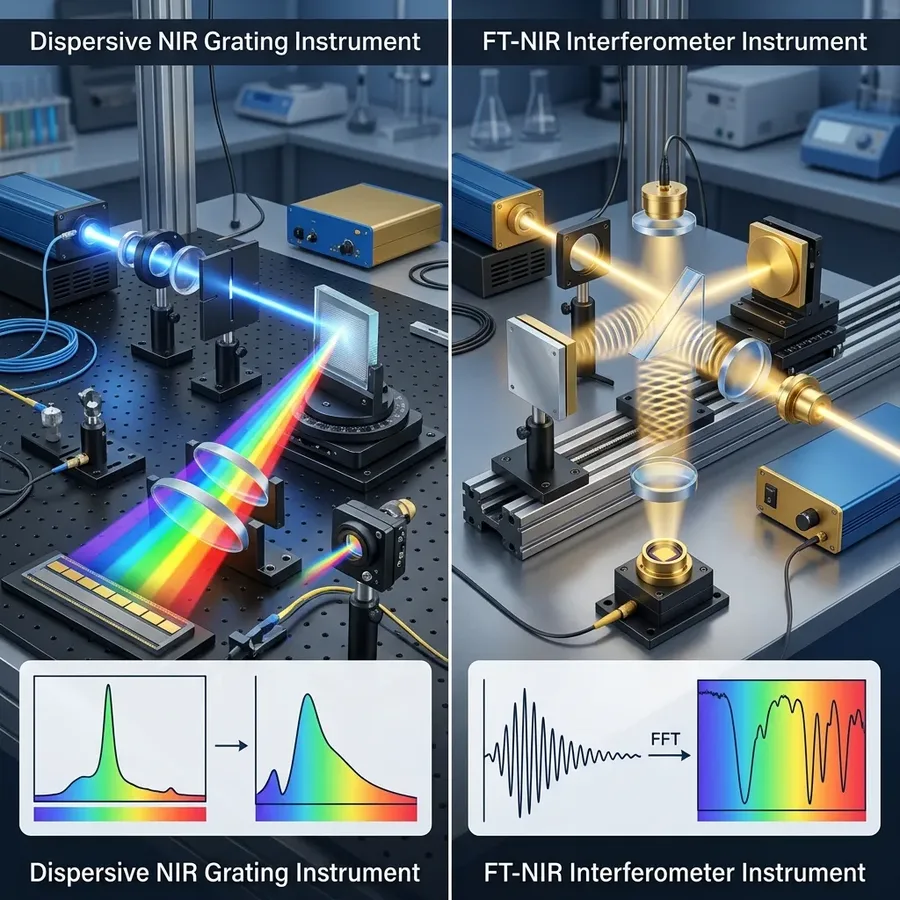
Calibration Transfer Between NIR Spectrometers: Methods and Feasibility
Why a NIR calibration built on one spectrometer rarely runs unchanged on another, which standardisation and model-adjustment methods the literature describes, and how transfer feasibility is assessed for an instrument family.
Read Guide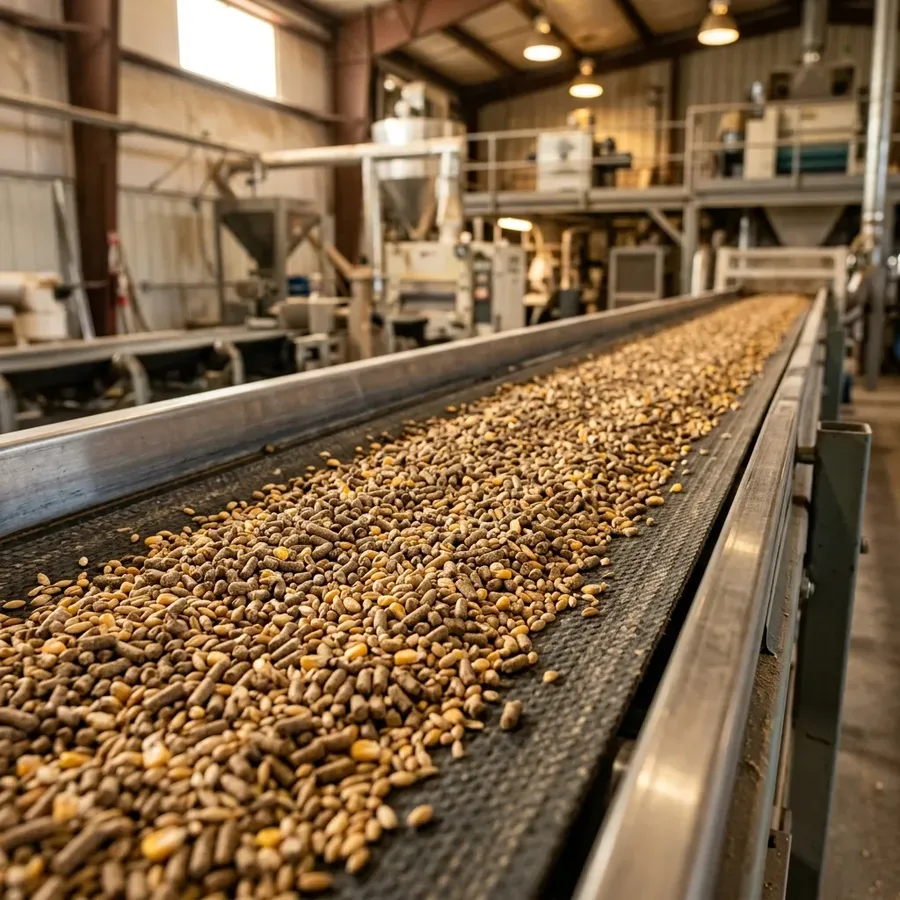
Reducing Ingredient Waste in Cattle Feed Production
Why cattle feed is over-formulated against ingredient variability, what the literature says about where that variability comes from, and how NIR at intake and at the mixer narrows the margin.
Read Article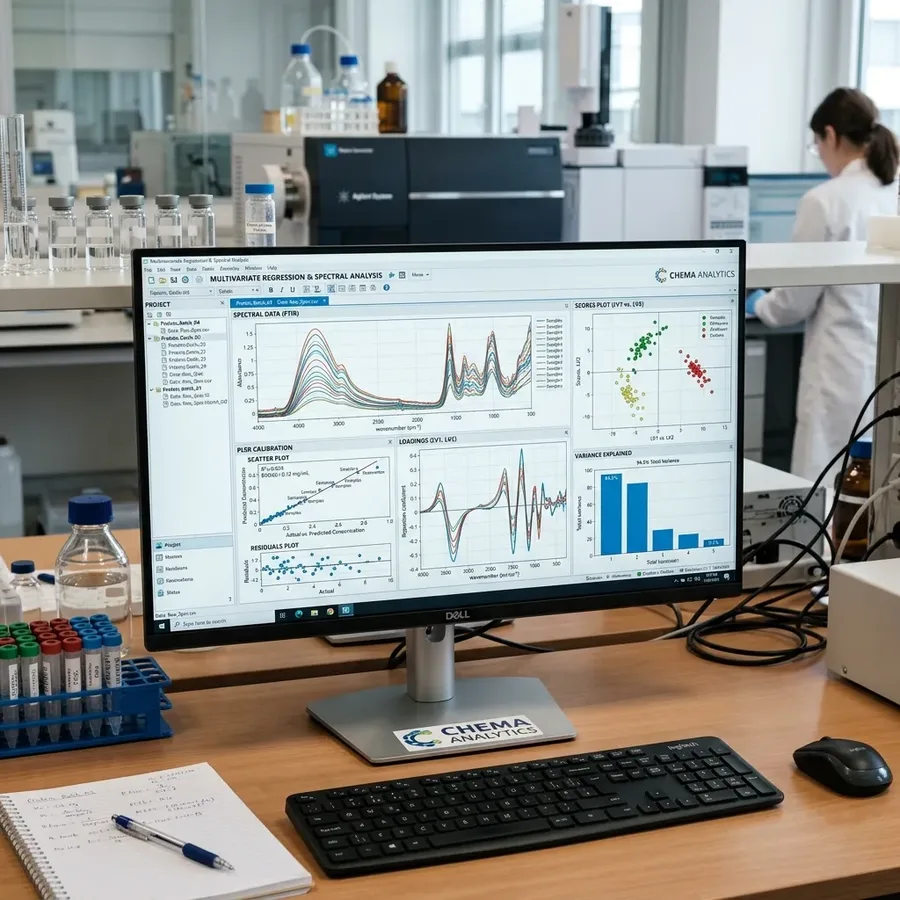
Introduction to PLS Regression in caliX Suite
A practitioner's walk through a PLS calibration: how the data are split, how the pre-processing and the number of latent variables are chosen by validation, which diagnostics to read, and how the model is kept alive in production.
Read Guide
Real-Time Hydroxyl Value Monitoring in Polyol Production
Why the hydroxyl number is the end-point variable in polyol production, what the titration reference methods and the NIR standards require, and why temperature is the main obstacle for an in-reactor calibration.
Read Article
Standardizing Moisture in Milk Powder Spray Drying
Why the outlet moisture of a milk-powder spray dryer decides stickiness, caking, shelf life and yield, which variables the operator can move, and how an inline NIR moisture value feeds the control loop.
Read Article
Understanding Savitzky-Golay Filtering in Preprocessing
What the Savitzky-Golay filter actually does to a spectrum, why derivatives remove baselines, and how window length and polynomial order should be chosen, with the original and follow-up literature.
Read Guide
Blend Uniformity Verification in Active Pharmaceutical Blending
Why blend uniformity is a regulated in-process attribute, what thief sampling can and cannot tell you, and what the literature shows about in-line NIR monitoring of powder blending as a PAT tool.
Read Article
MEMS Comb-Drive Mechanical Durability in Industrial Environments
What the reliability literature says about silicon springs and comb drives under shock, vibration, temperature cycling and fatigue, and what the military and IEC environmental test methods actually specify.
Read Article
Developing Robust Chemometric Classification Models via PCA
How PCA scores, loadings and residuals become a classification model, where the Hotelling and Q limits come from, why class-modelling differs from PLS-DA, and how regulators expect a qualitative NIR model to be validated.
Read Guide
Optimizing Starch Extraction Efficiency in Wet Corn Milling
Where starch is lost in a corn wet mill, how separation performance is measured, and what published work says spectroscopy can and cannot monitor in slurry streams.
Read Article
Optical Fiber Interface Designs for Corrosive Chemical Reactors
How probe geometry, the silica fibre, the sapphire window, the wetted alloy and the seal decide what an NIR spectrometer actually sees inside a corrosive or hot reactor, with the literature behind each choice.
Read Guide
Closing the Dosing Loop on Analyzer Results with OPC UA
What an analyzer result needs to carry over OPC UA before a PLC may act on it, how dead time and sampling interval shape the PID loop, and where the safety interlocks must sit, with the standards behind each point.
Read Guide
Moisture and Protein Analysis in Milk Powder by NIR Spectroscopy
How moisture, protein, fat and lactose in milk powder are determined by the reference methods, what published NIR calibrations report for them, and how an at-line or inline NIR step is calibrated and validated.
Read Article
Real-Time Fat Analysis in Ground Beef Processing
Why fat content is the controlling specification for ground beef, what the reference methods involve, and what peer-reviewed on-line NIR studies at grinder outlets and on conveyors actually report.
Read Article
Crude Fiber and Ash Content Determination in Feed Rations by NIR Spectroscopy
How crude fibre and ash are determined by the reference methods, what published NIR calibrations achieve for them in compound feed, and how an at-line step fits into a mill's quality routine.
Read Article
Starch Damage and Gluten Quality in Durum Wheat Semolina
What starch damage, wet gluten and gluten index mean for pasta quality, how the reference methods work, and what published NIR studies can and cannot predict in durum semolina.
Read Article
Hydroxyl Value Monitoring in Polymerization Processes
What hydroxyl value and acid value tell you about a step-growth polyester batch, how the titration reference methods work, why the O–H bands make the reaction visible to NIR, and what in-reactor studies have shown.
Read Article
Free Fatty Acidity (FFA) Monitoring in Olive Oil Processing
How free acidity and peroxide value define olive oil grades, how they arise before and in the mill, what published NIR calibrations achieve for them, and where a measurement point fits.
Read Article
Bioreactor Feeding Optimization in Mammalian Cell Culture
Why glucose and lactate control matters in CHO fed-batch culture, why NIR struggles in aqueous culture media, and what the literature shows for in-situ Raman and mid-infrared feed control.
Read Article
Rapid Adulteration Detection in Raw Milk Receiving
What peer-reviewed studies show infrared spectroscopy can detect in raw milk, and how a screen-then-confirm step fits into a dairy intake line.
Read Article
Chemometric Outlier Detection: Mahalanobis Distance vs. Hotelling's T²
How Mahalanobis distance, Hotelling's T-squared, leverage and Q residuals tell a process analyzer whether a spectrum belongs to its calibration, how their limits are set, and why one statistic carries several names in software.
Read Guide
Wavelength Selection & Feature Engineering for NIR Spectral Models
Why restricting a NIR calibration to selected wavelengths can help, how iPLS, genetic algorithms, UVE, CARS, VIP and jackknifing choose them, and why the selection must be validated independently.
Read Guide
Evaluating Cheese Yield Prediction Models
How cheese yield is predicted from milk fat and protein, what infrared spectroscopy adds at milk intake and in the vat, and how a yield model is built and validated.
Read Article
Optimizing Fat and Protein Standardization in Liquid Milk
How in-line fat standardisation of drinking milk works, where density-based cream control reaches its limits, and what published work shows for in-line NIR measurement of fat and protein.
Read Article
Optimizing Oil and Protein Extraction in Soybean Crush Plants
How solvent extraction and the desolventiser-toaster set the oil, moisture and protein quality of soybean meal, which reference methods define them, and where NIR measurement fits.
Read Article
Moisture and Fat Standardization in Pet Food Extrusion
Why kibble moisture at the dryer exit and fat at the coater decide shelf life and label compliance, and what published NIR studies on extruded pet food actually show.
Read Article
Real-Time Moisture Control in Corn Gluten Feed Dryers
Why the gluten feed dryer is one of the largest energy users in a corn wet mill, what over-drying and under-drying cost, and how on-line NIR moisture measurement can close the dryer control loop.
Read Article
Continuous Ash and Protein Monitoring in Wheat Flour Milling
Why ash tracks bran in flour streams, what the incineration and Kjeldahl reference methods involve, what published NIR work shows for ash and protein, and how stream monitoring fits into a mill.
Read Article
Total Solids Control in Whey Permeate Evaporators
Why the solids content leaving a whey or permeate evaporator matters for fouling, lactose crystallisation and drying, and how it can be measured and controlled.
Read Article
Inline Fat and Moisture Standardization in Continuous Butter Making
What the butter standards fix for fat, water and salt, where a continuous buttermaker sets them, and what published inline-sensor and NIR studies show about controlling them at the line.
Read Article
Monitoring Lactic Acid and pH in Yogurt Fermentation
Why the end-point of yogurt fermentation matters, how pH and titratable acidity are measured, and what in-line NIR studies report about following acidification.
Read Article
Moisture and Salt Monitoring in Cheddar Cheese Milling
Why the salt-in-moisture ratio fixed at the salting belt governs Cheddar ripening, how moisture and salt are determined by the reference methods, and what published NIR studies show for cheese.
Read Article
Incoming Milk Fat and Total Solids Grading at Receiving Docks
Why raw milk is paid for by its fat, protein and solids, how the reference methods and mid-infrared analysers establish those values, and what published NIR studies show for raw-milk composition.
Read Article
Moisture Monitoring in Fluid Bed Granulation
Why residual moisture is the critical attribute of a fluid-bed granulation, what the reference methods measure, what in-line NIR studies have shown, and why sampling, probe fouling and temperature decide whether the method holds up.
Read Article
Inline Solvent Purity Monitoring in Chemical Distillation Columns
Why distillation columns are usually run on temperature, what near-infrared spectroscopy adds for solvent composition and water content, and how such an analyzer is calibrated and validated.
Read Article
Density and Crystallinity Grading of Polyethylene Packaging
How density and crystallinity of LDPE, LLDPE and HDPE are determined by the reference methods, what the near-infrared spectrum of polyethylene actually encodes, and what published NIR density calibrations have achieved on pellets, film and melt.
Read Article
Incoming Raw Material Identification in Pharmaceutical Warehouses
Why GMP expects an identity test on every container of starting material, what the EMA and the pharmacopoeias require of a qualitative NIR method, and how spectral libraries and through-container measurement are built and validated.
Read Article
Acid Value and Viscosity Tracking in Alkyd Resin Cooking
Why alkyd cooks are followed by acid value and viscosity, what the titration and viscosity reference methods involve, why the gel point makes timing critical, and what published in-line NIR studies show.
Read Article
Multiplicative Scatter Correction and Standard Normal Variate Preprocessing
What multiplicative scatter correction and the standard normal variate transform do to a diffuse-reflectance NIR spectrum, how the two are related, and when each is the better choice.
Read Guide
Standardizing Reference Background Measurement Intervals in Process Spectroscopy
Why a process NIR spectrometer needs reference measurements, which effects make its response drift, and how performance tests and routine checks reveal drift before it reaches the results.
Read Guide
What Is FT-NIR Spectroscopy? A Plain-Language Guide for Food and Feed Manufacturers
A plain-language introduction to Fourier-transform NIR: how an interferometer turns light into a spectrum, what the bands say about water, protein, fat and carbohydrate, and why calibration is needed.
Read Guide
NIR vs. FT-NIR: What’s the Difference — and Why It Matters for Inline Process Control
How scanning-grating, diode-array and Fourier-transform NIR analyzers produce a spectrum, what the throughput, multiplex and wavelength-axis advantages really buy, and which trade-offs decide an inline application.
Read Guide
Inline vs. At-Line vs. Off-Line Analysis: Which Approach Is Right for Your Production Line?
How the FDA PAT guidance defines at-line, on-line and in-line measurement, what each location trades away in delay, sampling error and validation effort, and how to choose the arrangement a production line actually needs.
Read Guide
The Hidden Costs of Lab-Based Quality Control in Food and Feed Manufacturing
Result latency, sampling error, over-formulation and reference-method chemistry each carry a cost that never appears on the laboratory budget; what the literature says, and where process NIR fits.
Read Article
How NIR Analyzers Integrate with PLC and SCADA Systems: A Practical Overview
The integration landscape for inline NIR results: field protocols from the current loop to OPC UA, the value-status-timestamp record, where latency comes from, and how alarms, historians and cybersecurity are handled.
Read Guide
5 Questions to Ask Before Buying an Inline NIR Analyzer
A vendor-neutral checklist for buying an inline NIR analyzer: measurability and accuracy, the sample interface, calibration ownership, data integration and lifecycle validation.
Read Guide