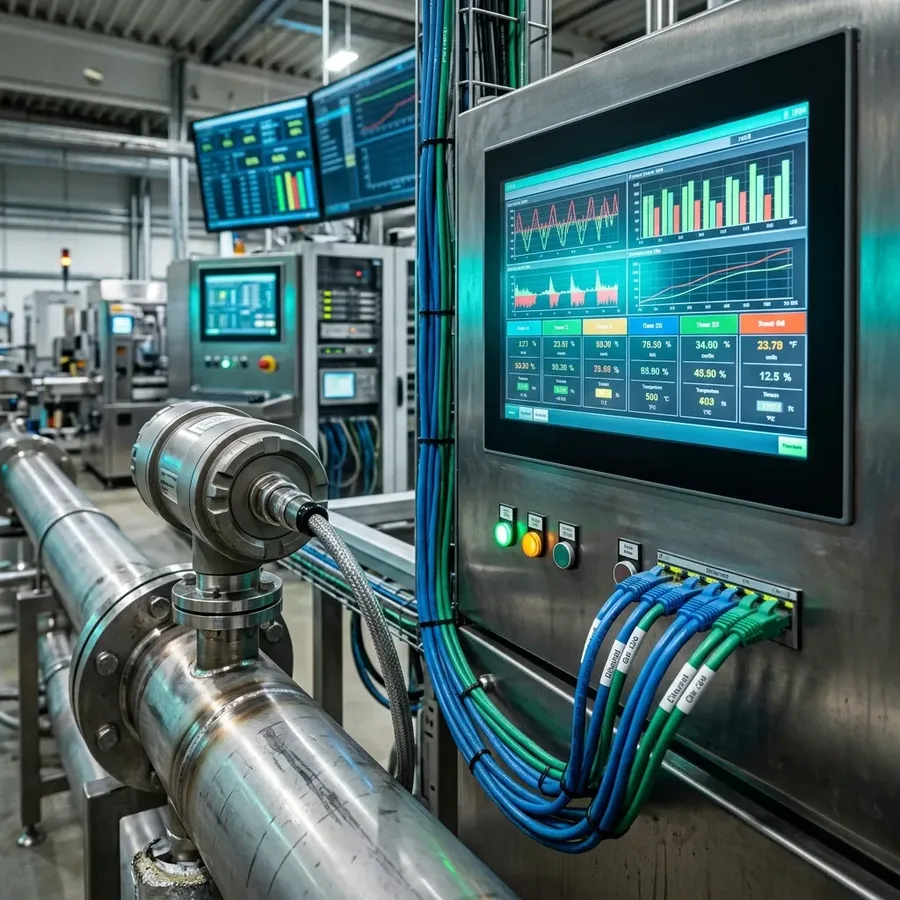
The value of inline FT-NIR analysis is not limited to the measurement itself. For manufacturers operating automated production environments, the ability to feed real-time analytical data directly into process control systems — PLCs, SCADA, and MES platforms — is what transforms an analytical instrument into a process intelligence tool. This article provides a practical overview of how FT-NIR analyzers connect with plant automation infrastructure, what integration architectures are available, and what to consider when planning an inline NIR deployment in an automated facility.
Why Integration Matters
An inline FT-NIR analyzer that delivers measurement results only to a dedicated display or software interface requires a human operator to read those results and initiate any process adjustment. This is a significant improvement over laboratory-based testing, but it still depends on operator attention and introduces human response latency. When analytical data is integrated directly with the PLC or SCADA system controlling the production process, the loop can be closed automatically. A moisture reading above a defined threshold can trigger an adjustment to drying time or temperature without requiring human intervention.
"When analytical data is integrated directly with the PLC or SCADA system controlling the production process, the loop can be closed automatically — transforming an analytical instrument into a true process intelligence tool."
Common Integration Architectures
Ethernet TCP/IP with HTTP interface is the most flexible and increasingly common integration method for modern inline analyzers. The analyzer operates as a server on the plant network, and the PLC or SCADA system queries measurement results via standard HTTP requests at defined intervals. The ProLine2550 implements this architecture natively — measurement results are available via the HTTP interface immediately after each scan cycle.
OPC-UA and industrial protocols such as Modbus TCP or PROFINET are also used in more complex automation environments. While the ProLine2550’s primary integration path is Ethernet/HTTP, the ProChem software platform provides additional data export options that can feed into historian systems, MES platforms, and data aggregation middleware.
What Data Is Available for Integration
At each measurement cycle, the ProLine2550 generates a set of quantitative parameter values — moisture, protein, fat, and any other parameters included in the active calibration model. These values, along with a timestamp and instrument status indicators, are available via the data interface. The most commonly used data elements are:
- Current measured values for each active parameter
- Alarm status flags when a parameter exceeds defined limits
- Instrument health status indicators for proactive maintenance and uptime monitoring
Practical Considerations for Integration Planning
Network architecture is the first practical consideration. The analyzer needs to be accessible on the plant network. The ProLine2550 connects via standard Ethernet and uses 24V DC power, making it straightforward to incorporate into existing industrial network topologies.
PLC polling frequency should be aligned with the analyzer’s measurement cycle time. The ProLine2550 delivers a new measurement result approximately every few seconds depending on configuration, so the PLC polling interval should be set accordingly to capture every measurement without unnecessary network overhead.
Alarm threshold configuration is a critical step in any integration deployment. For each measured parameter, you need to define normal operating ranges, warning thresholds, and alarm limits. These thresholds should reflect both the product specification tolerances and the measurement uncertainty of the analytical method.
Calibration model management should be considered in the context of long-term integration. Updating a calibration model should not require significant disruption to the PLC integration. The ProChem software platform allows calibration updates to be deployed without changing the data interface configuration, ensuring continuity of the automation link.
From Measurement to Control
The full value of inline FT-NIR analysis is realized when measurement data becomes an active input to process control. The path from installation to integrated process control is a progression — from standalone measurement, to data logging and monitoring, to alarm-based notification, to automated process feedback. Each stage builds on the previous one, and the integration architecture should be designed to support this progression from the outset.
"The ProLine2550 connects to your plant via standard Ethernet TCP/IP. Contact USTECH to discuss integration with your automation environment."