The Core Principle
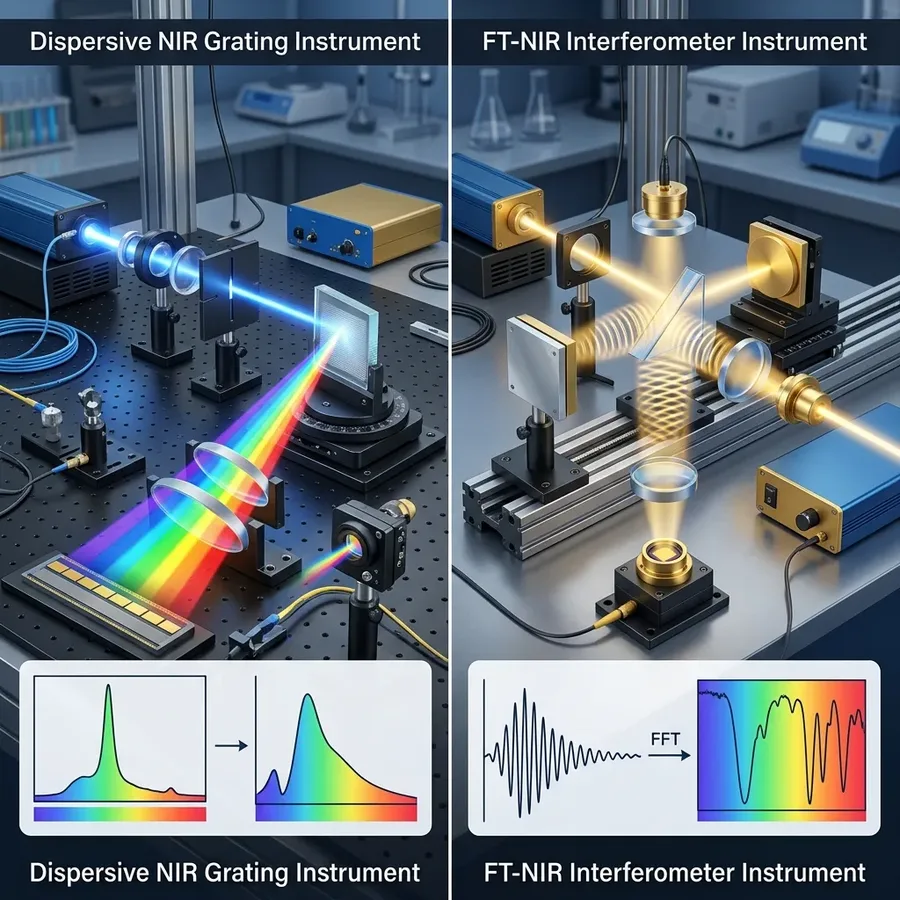
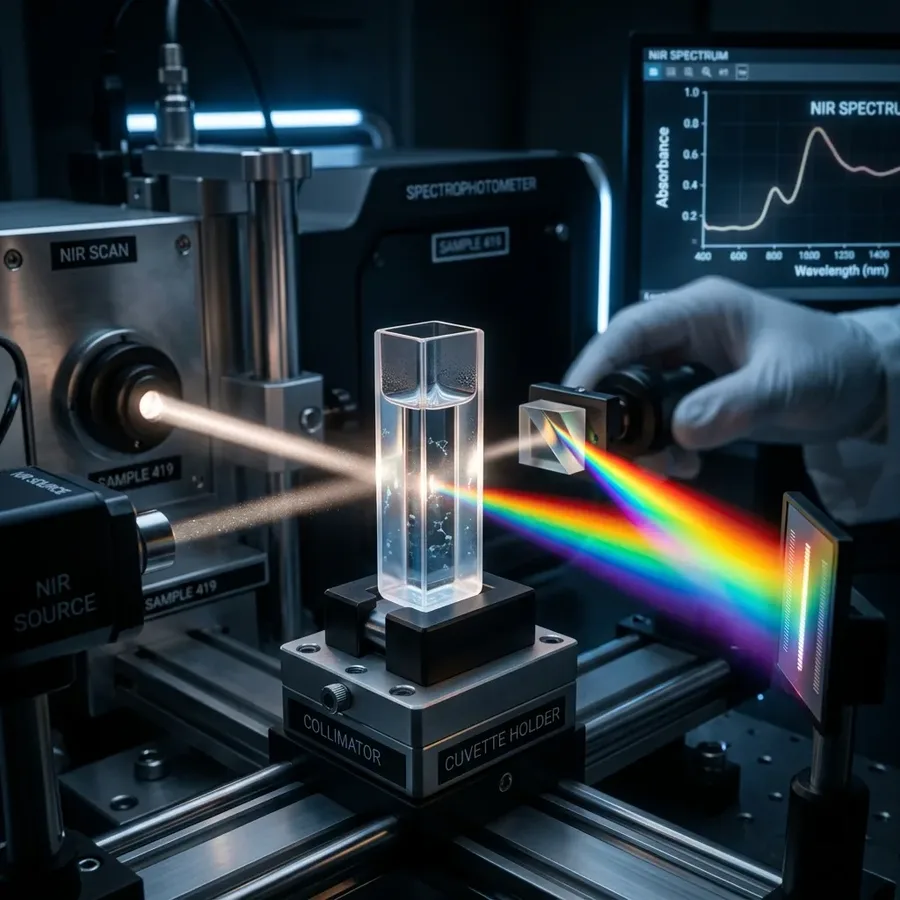
Every molecule absorbs light at specific wavelengths corresponding to its chemical bond vibrations. C–H bonds (fats, organics) absorb at different wavelengths than O–H bonds (water, sugars) or N–H bonds (proteins). By shining NIR light (700–2,500 nm) onto a sample and measuring absorption at each wavelength, we obtain a spectral fingerprint reflecting the sample’s chemical composition.
“By measuring how molecules absorb near-infrared light, NIR spectroscopy reveals the chemical composition of any sample — instantly, non-destructively, and without reagents.”
What Makes NIR Unique
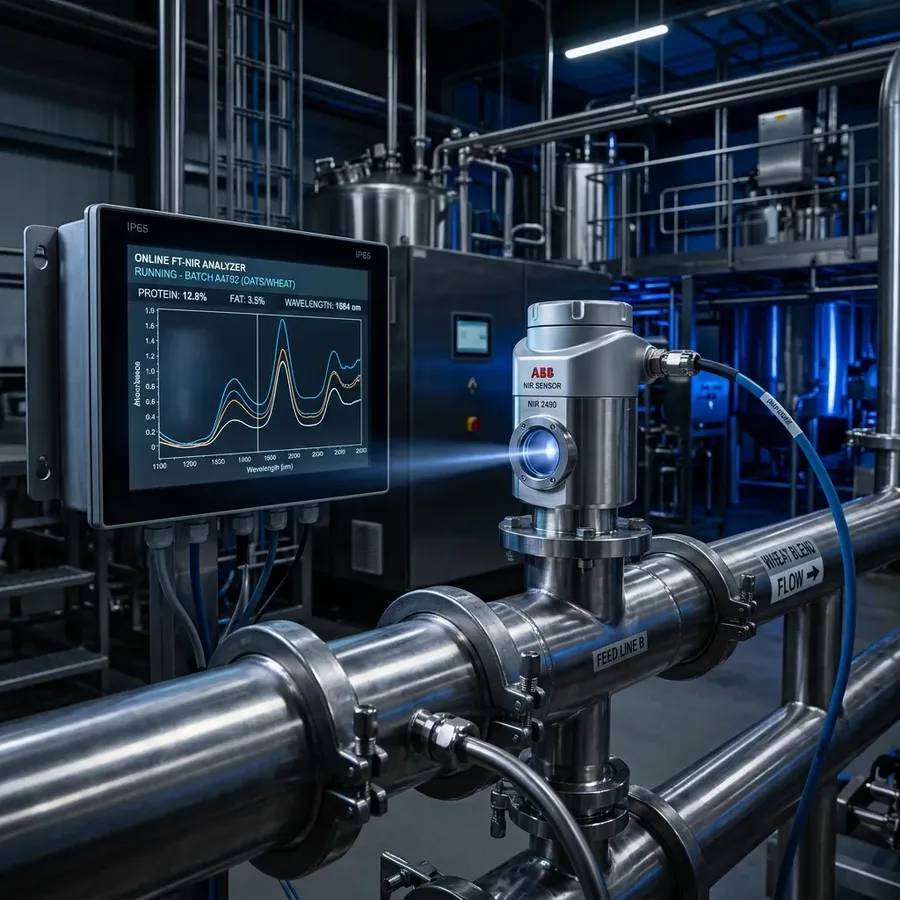
NIR spectroscopy offers four properties no other common technique can match simultaneously: non-destructive (sample unchanged after measurement), no chemical reagents required, results in under 30 seconds, and simultaneous measurement of multiple parameters from a single scan. These properties make it the only technique suitable for continuous inline monitoring in industrial production.
Key NIR Advantages
- ✓ Non-destructive — sample unchanged after measurement
- ✓ No chemical reagents — zero waste, zero cost per test
- ✓ Results in under 30 seconds vs. 15–60 min for wet chemistry
- ✓ Simultaneous multi-parameter results from one scan
- ✓ Suitable for inline deployment — no sampling interruption
- ✓ Applicable to solids, liquids, pastes, powders, granules
Devices like the ProLine2550 harness these advantages for food and feed, dairy, and chemical and pharmaceutical applications.
Key Measurable Parameters
| Parameter | Industry Application | Reference Method |
|---|---|---|
| Fat | Dairy, feed, food | ISO 1211, Soxhlet |
| Protein | Feed, dairy, food | ISO 5983, Kjeldahl |
| Moisture | All industries | ISO 712, Karl Fischer |
| Starch | Feed, grain, food | ICC 168, Enzymatic |
| API Concentration | Pharmaceutical, chemical | HPLC, Titration |
| NDF | Feed, forage | Van Soest |
| Hydroxyl Value | Chemical, polymer | Titration |
“NIR is the only analytical technique that simultaneously delivers non-destructive, reagent-free, sub-30-second, multi-parameter results — making it uniquely suited for inline industrial monitoring.”
To understand how chemometric models like caliX transform these spectra into actionable composition values, explore our detailed comparison of NIR vs. FT-NIR technologies.