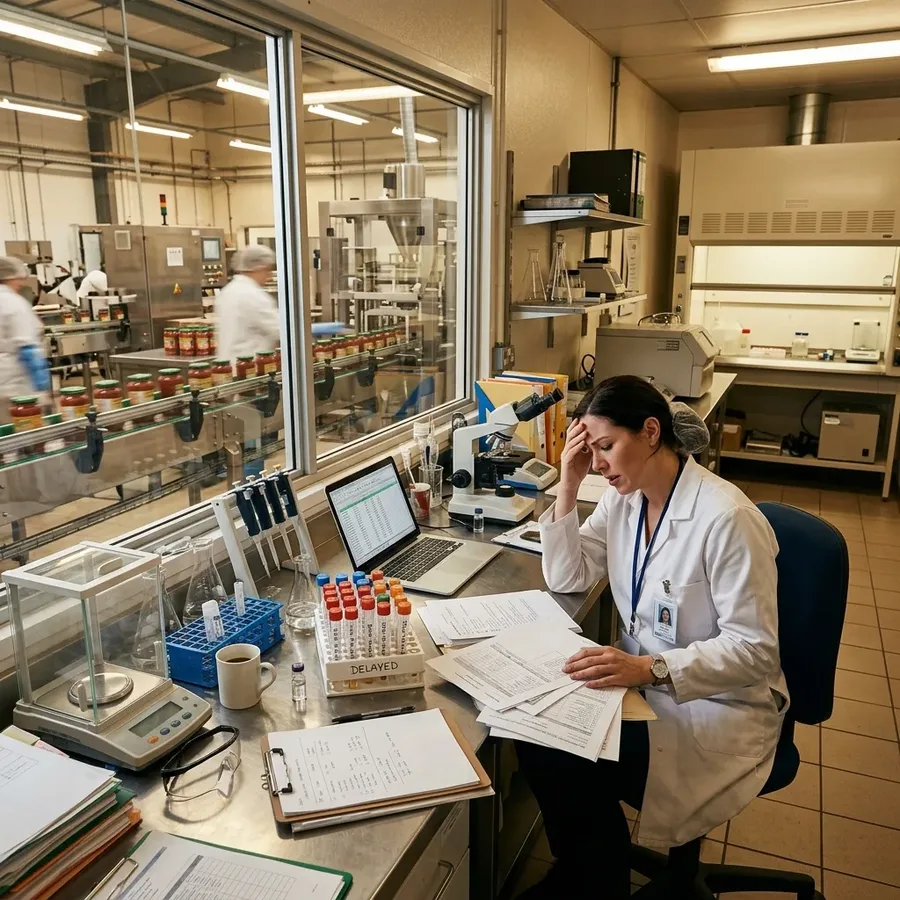
For decades, quality control in manufacturing has been managed as a “reactive” process. In a traditional workflow, a physical sample is extracted from the production line, transported to the laboratory, prepared with chemical solvents, and subjected to testing. This cycle typically spans from 30 minutes to several hours. However, in process industries, time directly translates to quality and cost. By the time the laboratory results are finalized, tons of off-spec products may have already passed through the line.
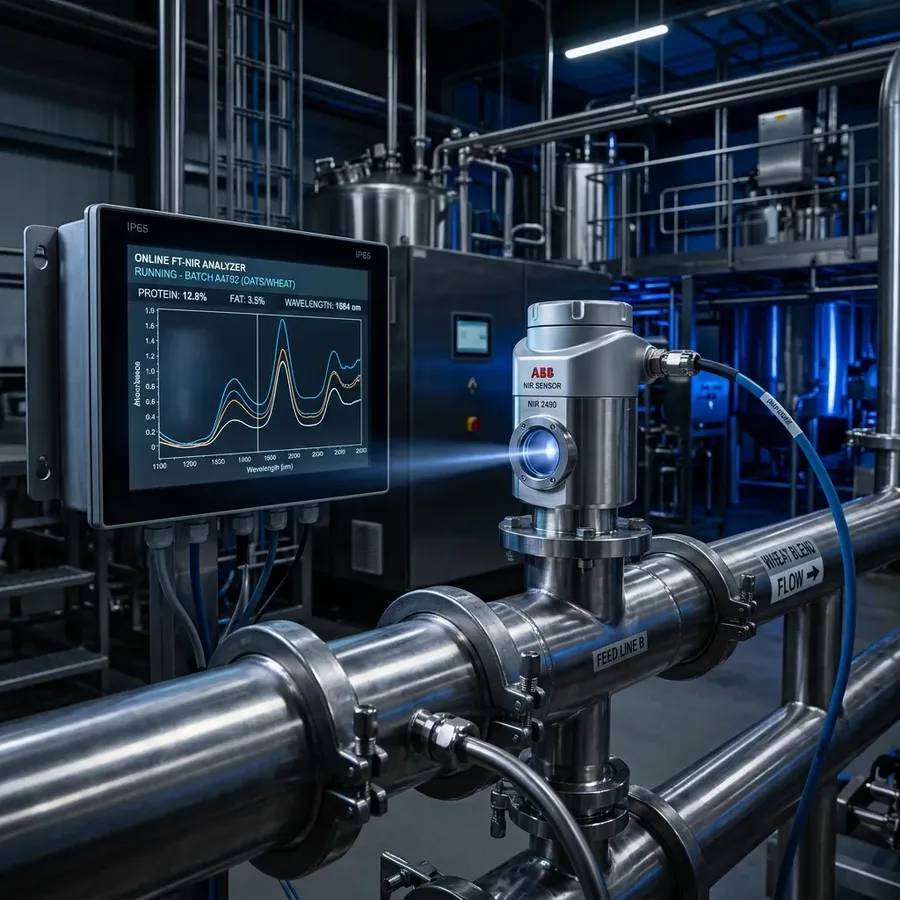
This is precisely where FT-NIR (Fourier Transform Near-Infrared) spectroscopy triggers a paradigm shift by migrating quality control from the laboratory directly to the heart of the production line. Devices like the ProLine2550 make this transition seamless, delivering laboratory-grade accuracy at production-line speed.
“By the time laboratory results are finalized, tons of off-spec products may have already passed through the line. In-line FT-NIR eliminates this costly delay entirely.”
Operating Principle of FT-NIR Technology
The near-infrared (NIR) region lies between visible light and the mid-infrared region on the electromagnetic spectrum. An FT-NIR instrument directs light at a specific wavelength onto the target flowing through the production line. The molecular bonds in organic compounds (such as C–H, N–H, O–H) absorb a fraction of this light energy. The profile of the light that reflects back or passes through the sample forms a spectrum, acting as the chemical fingerprint of the product.
The internal interferometer and Fourier Transform algorithms then convert these complex light signals into meaningful, high-resolution digital data. Unlike traditional dispersive NIR instruments, the FT-NIR approach captures the entire spectrum simultaneously, resulting in dramatically higher signal-to-noise ratios and measurement reproducibility — a critical advantage explored in our comparison of NIR vs. FT-NIR technologies.
Chemometrics: Transforming Data into Insight
The mathematical intelligence of the underlying software is just as critical as the hardware capabilities of an FT-NIR device. The massive datasets derived from the spectra are processed using multivariate statistical analysis techniques known as “Chemometrics.” Utilizing pre-calibrated models integrated into the system, the light reflections read by the device are instantly converted into quantifiable quality parameters such as protein, fat, moisture, ash, or Brix levels.
Tools like the caliX Spectral Suite make building and maintaining these chemometric models accessible to quality teams, with automated PLS regression, outlier detection, and model validation workflows. Meanwhile, ProChem software manages the real-time delivery of these results into plant automation systems.
“Chemometrics transforms raw spectral data into actionable quality parameters — protein, fat, moisture — in real time, without sample preparation or chemical reagents.”
FT-NIR Applications in Industrial Processes
FT-NIR maximizes process safety, particularly in facilities utilizing continuous processing. Here are three critical application domains:
Dairy Technology and Processing Lines
From raw milk intake to the standardization phase, fat and total solids content are monitored in real-time across milk powder or liquid product lines. Second-by-second moisture tracking in spray dryers prevents product agglomeration and ensures consistent powder quality, as demonstrated in our milk powder spray drying case study.
Meat Technology and Blend Optimization
In mixers preparing minced meat or sausage batters, in-line FT-NIR ensures the lean point perfectly aligns with the required recipe standards. This not only guarantees compliance with legal regulations but also optimizes raw material costs — as illustrated in our study on real-time fat analysis in ground beef processing.
Shelf Life and Product Safety
Products entering the packaging phase with the correct chemical composition exhibit enhanced physical stability. For instance, maintaining standardized levels of free water (relative to water activity) in a food emulsion via in-line sensors minimizes microbiological spoilage risks, ensuring the maximum targeted shelf life is achieved. This principle applies equally across food and feed manufacturing and chemical and pharmaceutical processes.
Return on Investment and Future Vision
By performing non-destructive measurements, eliminating chemical consumable costs, and drastically reducing the volume of rejected products, an in-line FT-NIR system typically amortizes its investment cost within a few months. The financial impact is measurable: explore our ROI calculator to estimate savings for your specific operation.
At USTECH Innovations, we integrate these advanced sensor data with our modeling software to design autonomous production lines that not only measure but dynamically react and self-optimize. The convergence of inline spectroscopy, chemometric intelligence, and industrial automation protocols represents the next evolution in manufacturing quality assurance.
“An in-line FT-NIR system typically amortizes its investment cost within a few months through reduced waste, eliminated reagent costs, and prevented off-spec production.”